Kitsch Queens: A Guide to Anthropomorphic Ceramics

Where bluebirds gossip, flowers blush, and vegetables smile back.

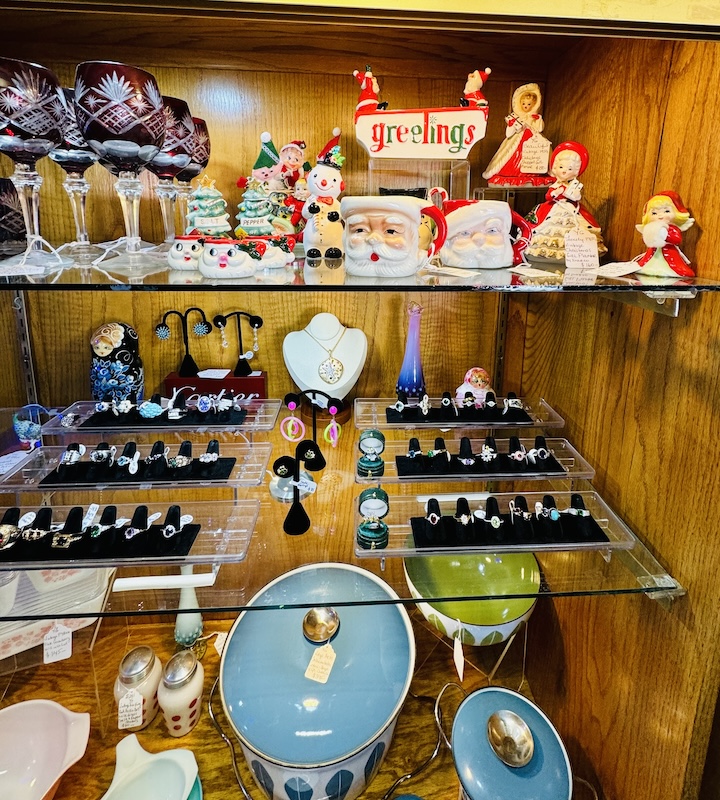
There’s something magical that happens when you open the glass doors of a true kitsch queen’s cabinet. These vintage 1950s Japanese ceramics aren’t just displays—they are a stage where bluebirds flirt and wide-eyed corn cuties ready for their close-up. If you collect anthropomorphic kitchen decor, you know the joy of a perfectly curated ‘shelfie’.

Vintage Lefton Bluebird Butter Dish and Sugar Bowl 1950s
Vintage Japan Bluebirds

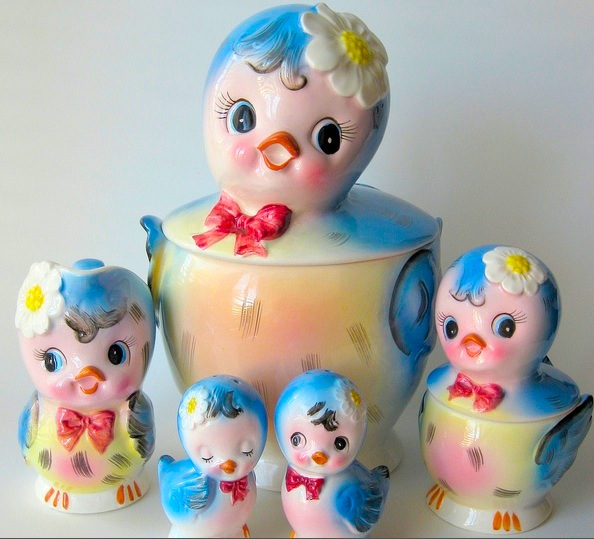
🩵 🐦Lefton Bluebirds lead the charge, their sweet sky-colored wings and bashful smiles turning spice racks into scenes from a 1950s kitchen fairytale. Norcrest and Topline Imports also manufactured bluebirds in Japan in the 1950s along with Lefton. Whether perched on planters or peeking from sugar bowls, they bring the chirpiest charm.

Vintage Lefton Bluebird Butter Dish and Sugar Bowl 1950s
Vintage Topline Lefton Bluebird Collection
PY Miyao Anthropomorphic Flower Wall Pocket Japan Kitsch
PY Anthropomorphic Flower Wall Plaques Wall Pockets

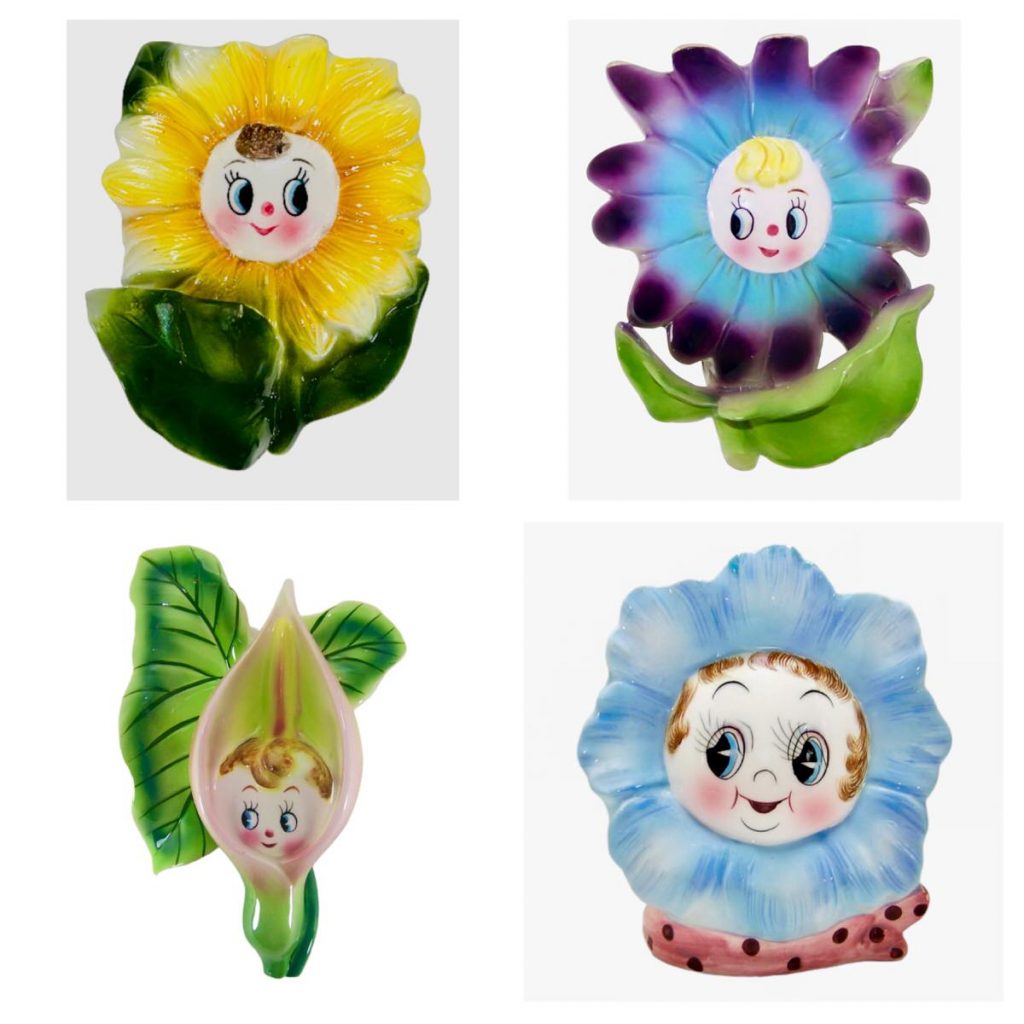
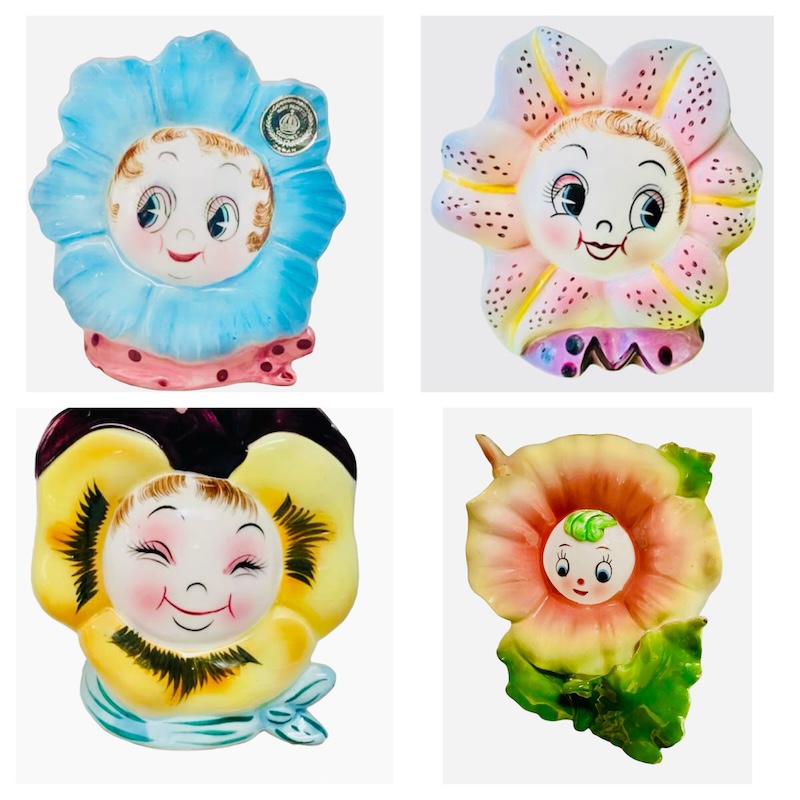
🌸 Flower-faced cuties—like daffodil darlings, pansy pixies, and rosy-cheeked blooms—are in full bloom inside collectors’ cabinets. These pastel-hued petals with personality add the perfect pop of charm to spring and summer shelfies. Made by PY Miyao in 1950s Japan, these whimsical wall plaques and pockets are prime examples of anthropomorphic ceramics—where even flowers have faces (and fabulous attitudes).

PY Miyao Anthropomorphic Flower Wall Pocket Japan Kitsch
Vintage PY Anthropomorphic Flower Planters and Wall PLaques Japan 1950s
Vintage Napco Anthropomorphic Corn Shakers with Eyelashes
PY Corn Anthropomorphic Kitsch

🌽 And let’s not forget the anthropomorphic produce: corn with eyelashes, cabbage with sass, and all have those big eyes and long eyelashes. These pieces, mostly by PY and Napco, are little works of adorably wonderful ceramics from the 1950s that turn kitchens into retro dreamlands.

Py Miyao Cabbage Cuties
Vintage Anthropomorphic PY Miyao Japan Ceramics

Peek inside vintage kitsch cabinets featuring Lefton bluebirds, flower-face cuties, and PY anthropomorphic ceramics in the ultimate “shelfie” showcase. These aren’t just shelves—they’re retro wonderlands where bluebirds gossip, blushing blossoms pose, and vegetables grin like they’re starring in a mid-century sitcom.

How to Identify and Care for Your Kitsch Collection

Identifying authentic vintage Japanese kitsch requires a keen eye for maker marks. Look for the classic gold foiled stickers from Lefton, or the stamped “PY” or “Japan” marks on the base.

3 Tips for Preserving Your Ceramics:

  • Avoid Hot Water: Many 1950s pieces are “cold-painted” (painted after firing), meaning the red lips or rosy cheeks can wash right off in hot water.
  • Dust with Care: Use a soft makeup brush to clean delicate eyelashes and petals.
  • Check for Crazing: Fine lines in the glaze are common in 70-year-old ceramics, but keeping them out of direct sunlight prevents further damage.

If you are looking to start your own collection, you can find authentic 1950s Japanese ceramics in my Etsy shop. For more tips, check out my guide on the best books for vintage collectors.”

Most of the photos featured are from my personal collection, with a few sourced from Pinterest to show the full charm of these collectible cuties.

Amazing 1958 Holt Howard “Devil Brew” Gremlin Decanter: A True Collector’s Find

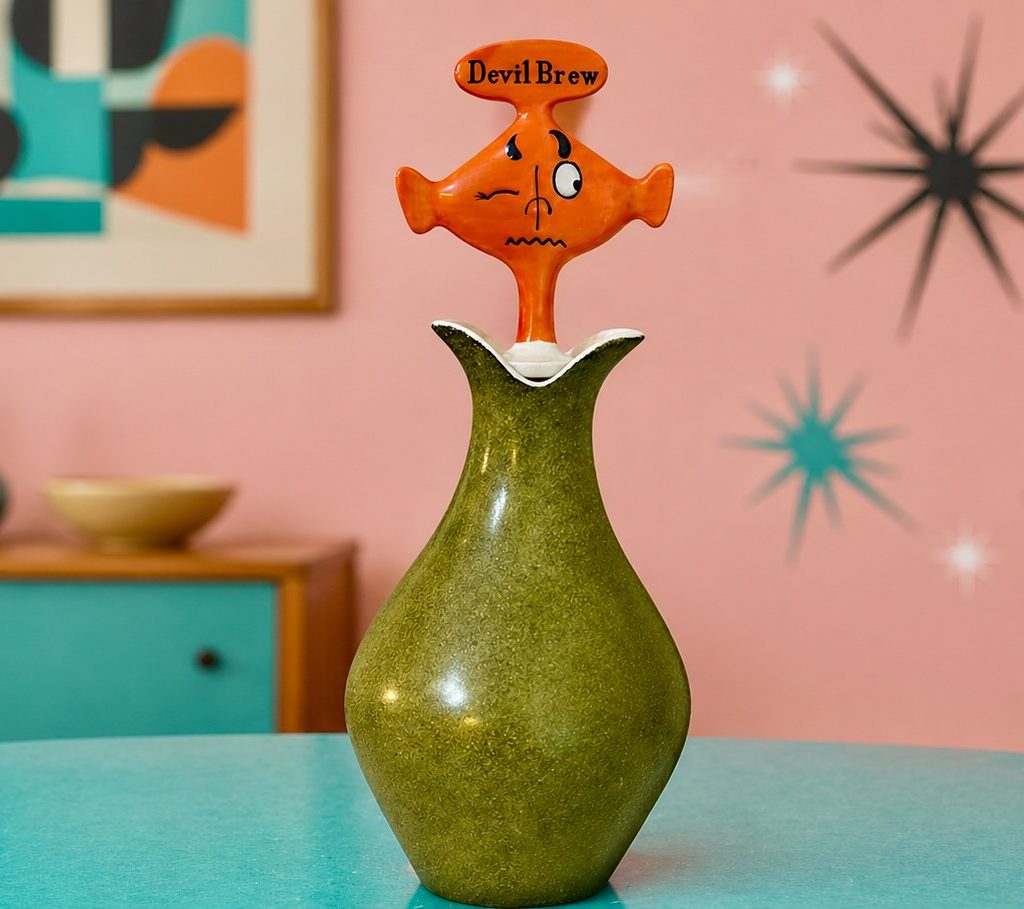
Vintage 1958 Holt Howard Devil Brew Gremlin decanter on turquoise mid-century table with pink atomic starburst background
A rare 1958 Holt Howard “Devil Brew” Gremlin decanter displayed in a whimsical mid-century modern atomic setting.

Every once in a while, a Holt Howard piece surfaces that reminds you why collecting mid-century kitsch is so addictive. Not just charming. Not just nostalgic. But genuinely hard to find.

The 1958 Holt Howard “Devil Brew” Gremlin decanter is one of those pieces.

Part of the whimsical Happy Party Gremlins line, this figural liquor decanter stands apart from the more commonly known Pixieware creations. While Holt Howard built its reputation on playful kitchenware and striped pixie designs, this decanter takes a slightly different path, leaning into bold color, character, and form in a way that feels almost sculptural.

What makes this example especially notable is the solid olive green base. Unlike the striped patterns most collectors associate with Pixieware, these solid-color bases were produced in far smaller quantities. That alone places this piece in a more elusive category, particularly when paired with the bright red “Devil Brew” Gremlin topper, complete with tiny horns and that unmistakable mischievous expression.

But rarity alone isn’t what drives collector interest. Condition is everything. And this is where pieces like this truly separate themselves. Many examples that surface today show crazing, cork deterioration, or wear from decades of use. Finding one in pristine condition, elevates it from collectible to standout.

From a design perspective, it’s pure 1950s magic. The olive green base reflects the mid-century era’s love of earthy tones, while the vibrant red Gremlin adds that signature Holt Howard whimsy. It’s a piece that works just as well displayed in a curated mid-century collection as it does anchoring a retro bar setup.

For collectors of Holt Howard, Pixieware, or vintage barware, this decanter checks all the right boxes: rarity, condition, and unmistakable character. And like many of the best mid-century finds, it blurs the line between functional object and art.

Pieces like this don’t show up often—and when they do, they tend to disappear into private collections just as quickly.

Learn more about Pixieware and ready my Holt-Howard Pixieware: The Best Guide with Prices and Tips

You might also enjoy Price Guide to Holt-Howard Collectibles and Other Related Ceramicwares of the 50s & 60s by Walter Dworkin

✨ Still hunting for that perfect piece of Holt Howard magic?

Explore more whimsical treasures, rare Pixieware finds, and mid-century collectibles in my 👉 Etsy shop—each one handpicked with collectors in mind. You never know what rare gem might be waiting for you there.

Norcrest Mermaids: Top Tips for Collectors

Vintage Norcrest Mermaids

The Story Behind Norcrest Mermaids

Dive into the enchanting world of Norcrest mermaids—tiny ceramic masterpieces that capture the whimsical beauty of the 1950s. With their exquisite craftsmanship, irresistible charm, and vintage allure, these collectibles stand out in the world of mermaid figurines. Whether you’re a seasoned collector or just discovering their magic, I’ll guide you through their rich history, value, and expert tips for curating your own collection. If you’ve ever wanted to start or expand your Norcrest mermaid collection, you’re in the right place—let’s explore the best tips for finding, preserving, and showcasing these stunning treasures!

Norcrest Mermaid Lipstick Holder with Blue Tail Against a Soft Pink Background
Norcrest Mermaid Lipstick Holder

The history of Norcrest mermaids is just as fascinating as the figures themselves. It all began with Hide Naito, a Japanese immigrant who founded a gift shop in Portland, Oregon, way back in 1921. Over time, that little shop grew into a huge wholesale operation. After World War II, Hide and his son Sam made a bold move: they shifted their focus to “Made in Japan” gifts, and that’s when Norcrest China Company was born (in 1958).

Norcrest quickly became a hit, known for its high-quality ceramics. Their mermaids, with their iconic designs, were stars of the collection, gracing bathrooms and powder rooms across America. Alongside these charming mermaids, Norcrest’s whimsical bluebird series and head vases were also beloved. I love that Norcrest became a household name – there’s something so special about owning a piece of that nostalgic history.

Continue reading

Lefton Bluebirds: Best Tips and Price Guide for Collectors

Yasmina Greco Lefton Bluebirds Topline Import Bluebirds

Lefton bluebirds have an undeniably captivating allure that draws collectors in immediately. With their delicate features and cheerful expressions, these charming little creatures have soared into the hearts of vintage enthusiasts worldwide. In this guide, we will explore bluebirds made by Norcrest, Napco, Lefton, and Topline Imports. Furthermore, we’ll discover how they became a beloved symbol of hope and share the ultimate price guide for your collection.

NOTE: You can read about my collections here at Antique Trader Magazine

Identifying Lefton vs. Norcrest and Topline Imports

Collectors often confuse Norcrest and Topline Imports with Lefton bluebirds. This happens because manufacturers produced them during the same era with very similar designs. For instance, the Norcrest China Company began in Japan in 1953 and created playful, brightly colored birds.

In contrast, Topline Imports usually feature a simpler, elegant design with a distinct matte finish. While many pieces lack permanent marks, you can often identify them by their specific stamps. Lefton pieces typically feature a “Lefton” stamp, whereas Norcrest uses a “Norcrest” mark. Meanwhile, Topline Imports frequently relied on paper labels or foil stickers that collectors may find today.

One reason why collectors confuse these three types of bluebirds is that they were all produced during the same era and share similar design features. Additionally, many of these bluebirds were not marked with identifying information, making it difficult to determine their origin.

However, there are some key differences between these three types of bluebirds that can help collectors identify them. For example, Lefton bluebirds are typically marked with a “Lefton” stamp, while Norcrest bluebirds are marked with a “Norcrest” stamp. Topline Imports bluebirds are often marked with a paper label or foil sticker that reads “Topline Imports.”

Topline Imports Bluebird Stamp and Tag

The most recognizable vintage bluebird manufacturer is Lefton. Lefton bluebirds are high quality and beautiful. George Zolton Lefton who was a Hungarian sportswear designer founded the Lefton Company.

The History of Lefton China

George Zolton Lefton, a Hungarian sportswear designer, founded the most recognizable manufacturer in this niche. He started the Lefton China Company in 1939 in Chicago, Illinois. Although the company produced everything from dinnerware to Christmas decor, the items made between 1945 and 1960 remain the most collectible.

Because Lefton contracted with Japanese factories, many authentic pieces bear the “Geo Z. Lefton” stamp alongside a “Made in Japan” foil label. Consequently, these Japanese-made items have become highly desirable in the modern market.

Lefton Bluebirds – Everyday Dining Collection (pic is from Pinterest)
Continue reading

Holt Howard Cozy Kittens Collector’s Guide

If you adore mid-century charm, playful kitchenware, and just a dash of feline mischief, the Holt Howard Cozy Kittens are about to steal your heart. In fact, these whimsical pieces have become some of the most beloved vintage collectibles from the 1950s.

The Holt Howard Cozy Kittens, also known as Cozy Kitchen Kitties, are among the most beloved vintage cat collectibles from the 1950s. Introduced in 1958 by Holt-Howard, these wide-eyed kittens transformed everyday kitchen items into whimsical works of art.

And today?

They’re highly collectible, surprisingly diverse… and in some cases, quite valuable.

What Are Holt Howard Cozy Kittens?

Holt Howard Cozy Kittens are a line of ceramic kitchen collectibles made in Japan during the late 1950s.

They’re known for:

  • Big expressive kitten faces
  • Hand-painted details
  • Playful mid-century colors (greens, blacks, polka dots, plaids)
  • Functional kitchen forms (jars, shakers, dishes)

These weren’t just decorations, they were meant to be used, which is exactly why finding them in excellent condition today is so exciting (and rare).

Complete List of Holt-Howard Cozy Kitten Pieces

Collectors often ask: “How many Cozy Kitten pieces are there?”

While no official master list exists, here’s a collector-backed guide to the most commonly known pieces:

Shop Cozy Kitten Pieces from My Collection:

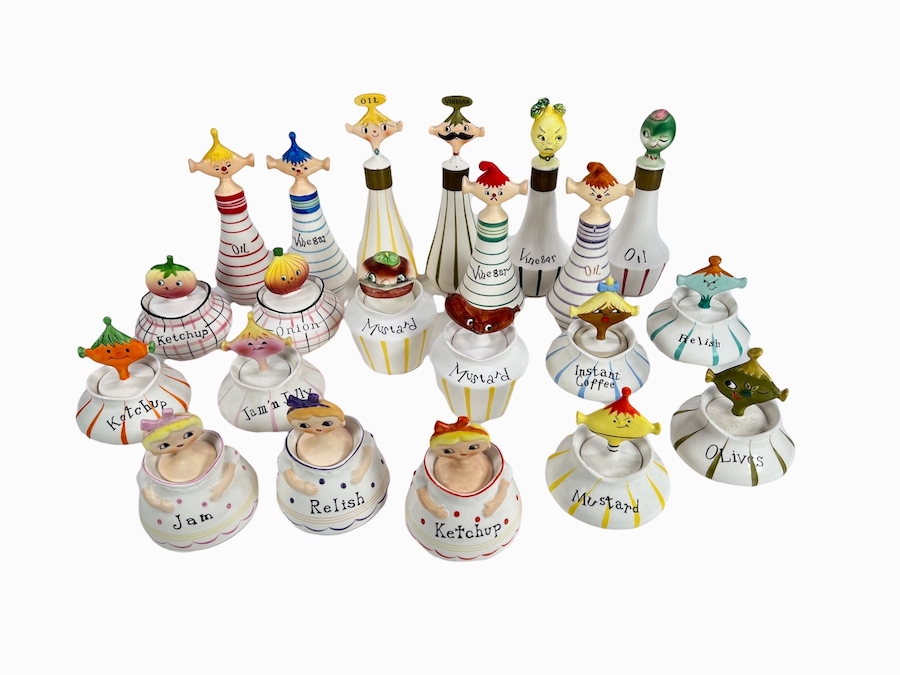
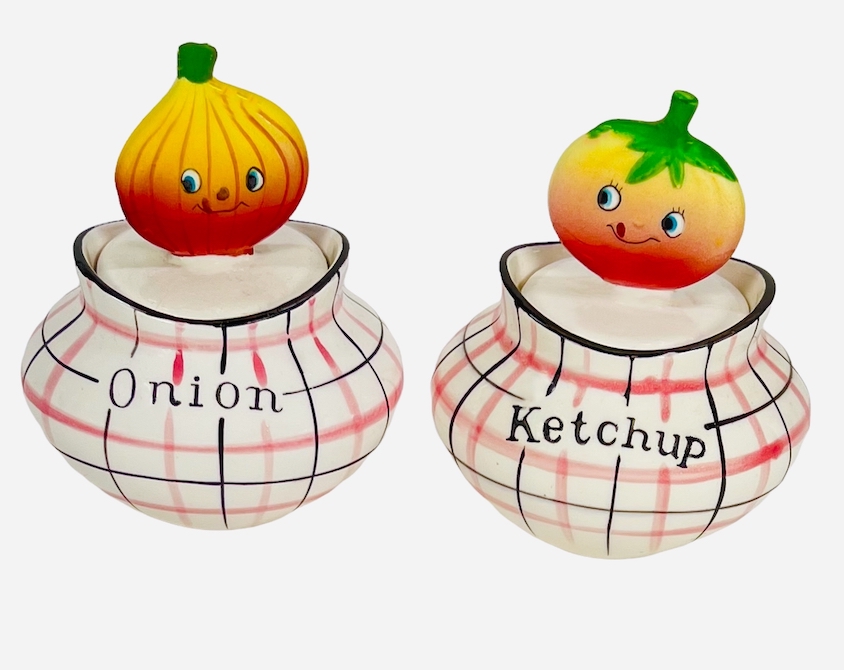
Pixieware Condiment Jars (Most Collectible)

Holt-Howard Cozy Kitten Pixieware condiment jars with spoons 1958 Japan
Rare Holt Howard Cozy Kittens Pixieware Jars
Holt-Howard Cozy Kitten Pixieware Ketchup Condiment  Jar 1958 Jaoan
Holt Howard Cozy Kitten Pixieware Ketchup Condiment Jar 1958 Jaoan

These are the stars of the show. In particular, the Pixieware jars are among the most sought-after pieces in the entire collection.

Featuring the iconic Spoofy Spoon lid, these jars allow serving without removing the lid—pure mid-century genius.

If you love these, you’ll also want to explore my full guide to Holt-Howard Pixieware jars

Continue reading

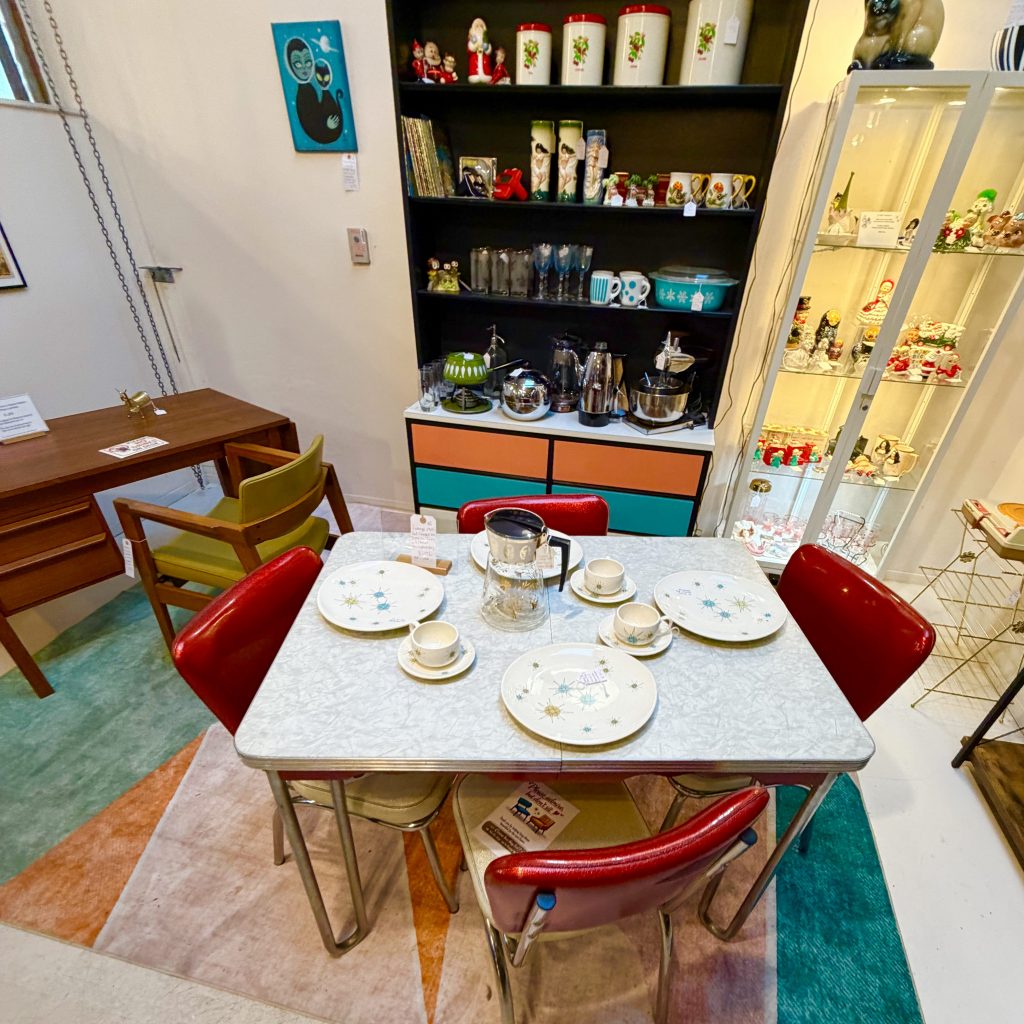
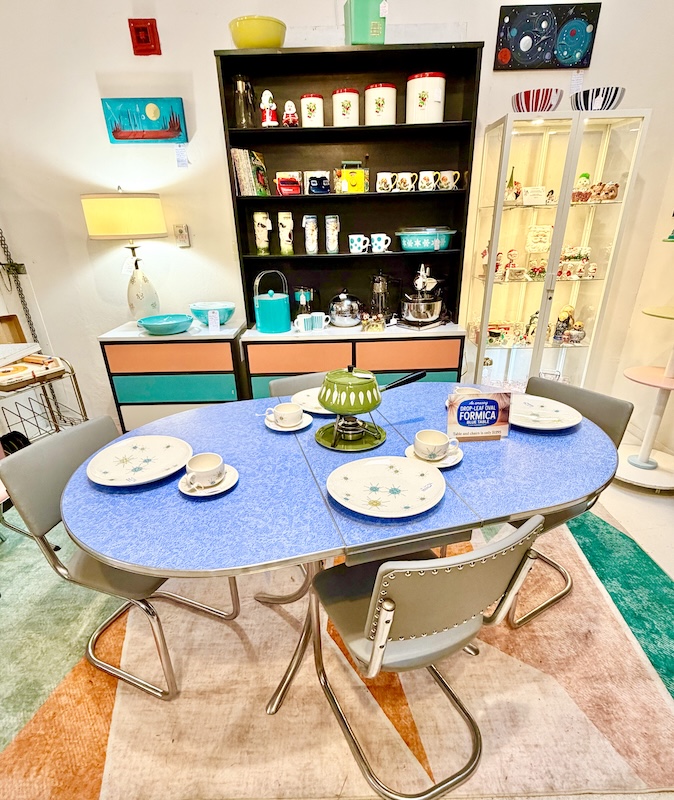
Vintage 1950s Formica Dinette Sets Tables and Chairs

If you’ve ever run your hand across a cool, glossy Formica tabletop and felt that little zing of nostalgia , you know.

A true 1950s Formica table and chair set isn’t just furniture. It’s root beer floats after school. It’s Saturday morning pancakes. It’s chrome sparkle and lipstick-red vinyl under a hanging globe light.

And yes… they are absolutely perfect for today’s homes.
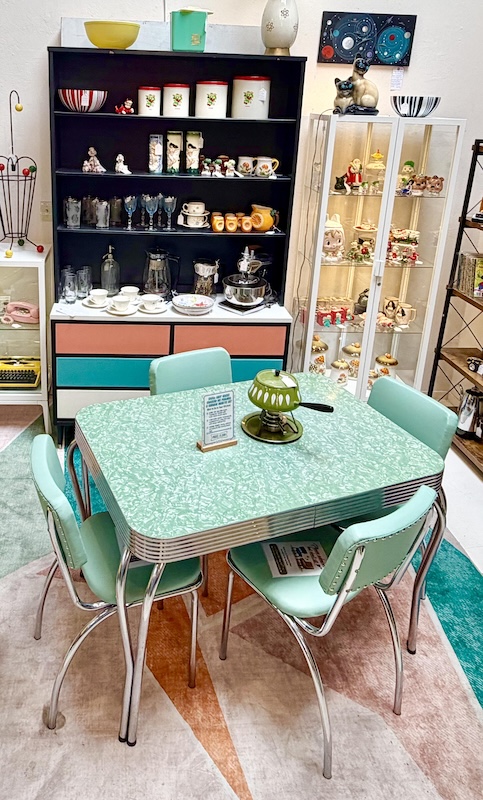
A vintage 1950s mint green 'cracked ice' Formica kitchen table with triple-ribbed chrome edging and four matching mint green vinyl upholstered chairs with chrome legs, displayed in an antique booth at Antique Society in Sebastopol
1950s Mint Green Formica and Chrome Dinette Set

At Crazy4Me, we don’t just sell mid-century pieces; moreover, we live with them, style them, and stage them the way they were meant to be loved. Specifically, let’s talk about why these atomic beauties still work today. Furthermore, I’ll show you how to incorporate a vintage Formica dining set into your modern life. However, the goal is to do this thoughtfully so that your space feels authentic without it looking like a theme park diner.
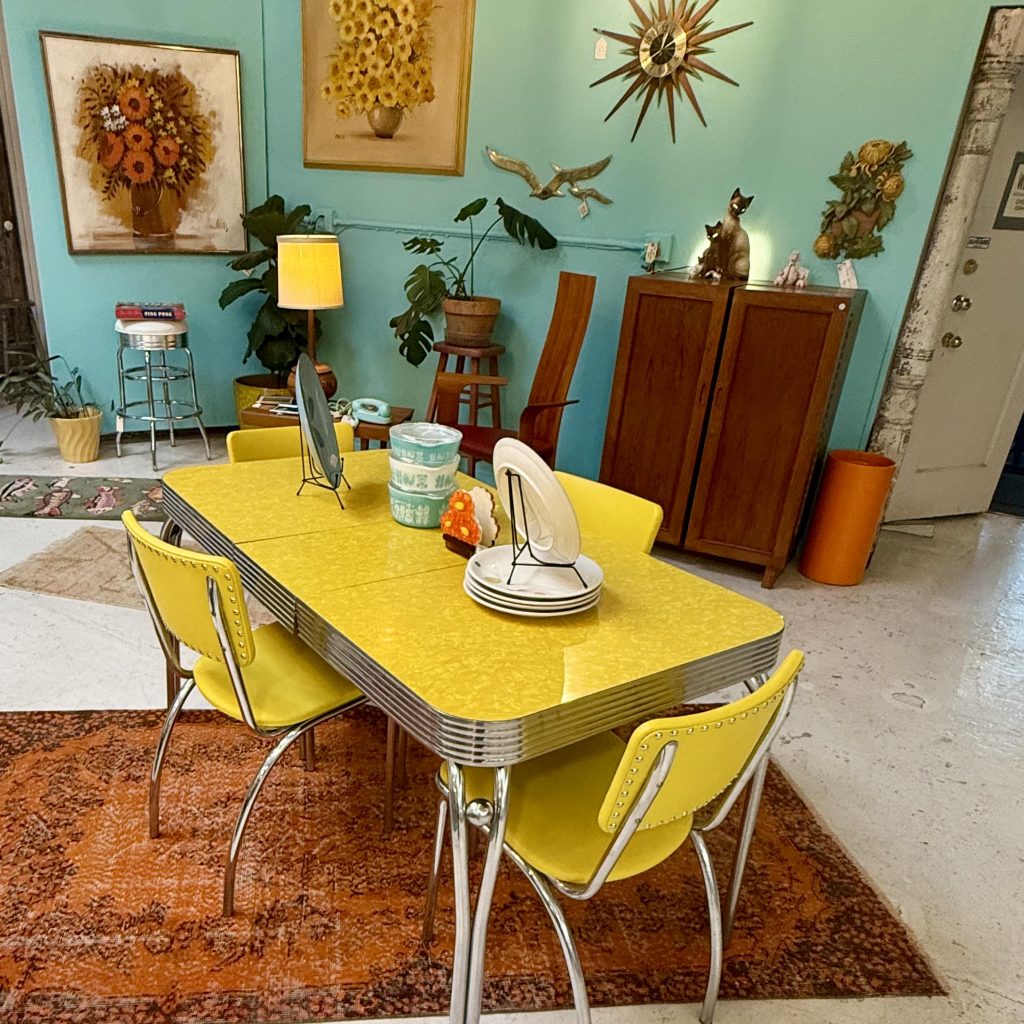
1950s Yellow Formica Table and Chairs

Why 1950s Formica Tables Still Win

There’s a reason mid-century Formica tables have such staying power:

  • Indestructible: Durable laminate tops that wipe clean in seconds.
  • The Glow: Chrome edging that catches the light just right.
  • The Palette: Bold, happy colors — turquoise, coral, baby blue, cherry red.
  • Versatile Fit: Compact drop-leaf and oval shapes perfect for smaller modern spaces.

They were designed for real living. Not precious. Not fussy. Just functional and fabulous. Today, with so many homes leaning neutral, a vintage Formica set becomes the joyful pop that makes a room feel alive.
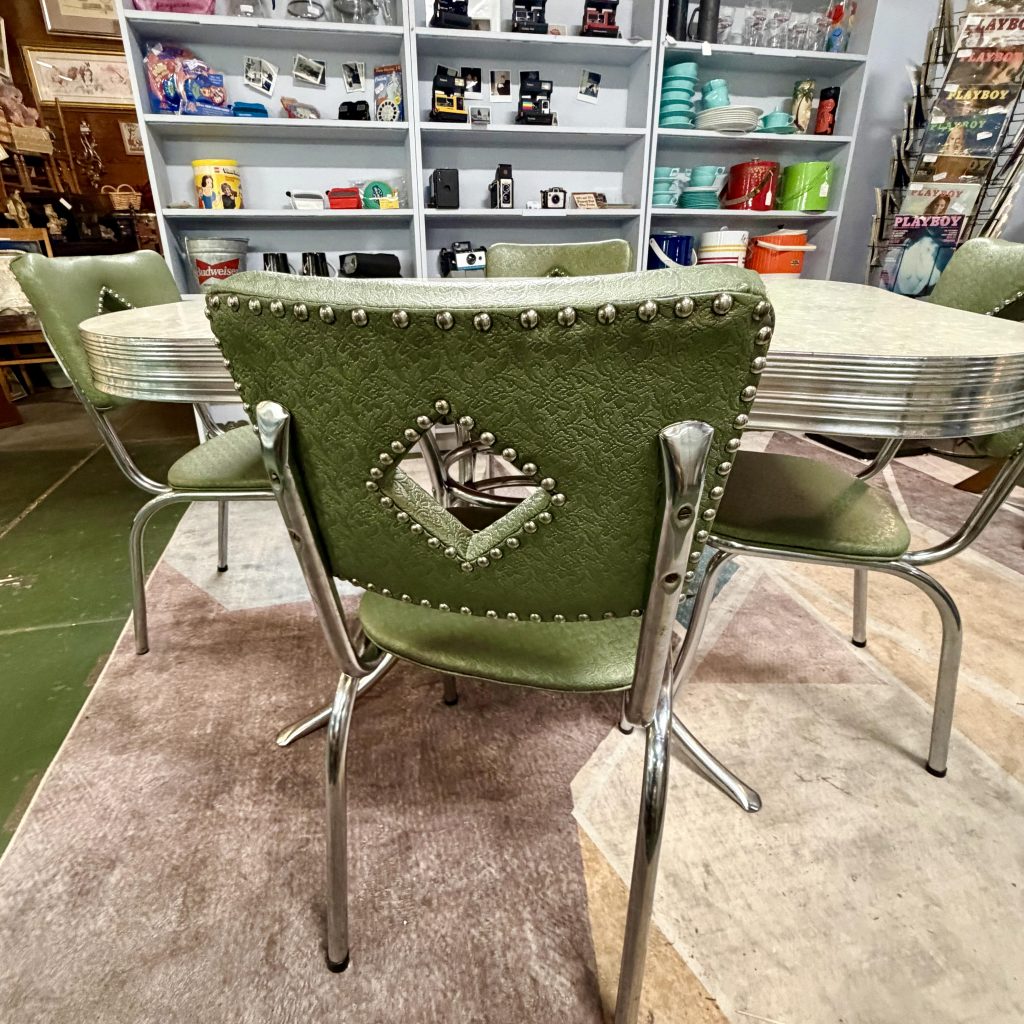
Close-up of a vintage mid-century modern dining chair featuring avocado green textured vinyl upholstery, a diamond-shaped cutout back with chrome nailhead trim, and a tubular chrome frame.
A 1950s chrome dinette set with a white cracked-ice Formica tabletop, ribbed aluminum edging, and four matching avocado green vinyl chairs with diamond-cutout backs.

6 Ways to Style Your Formica Set Today
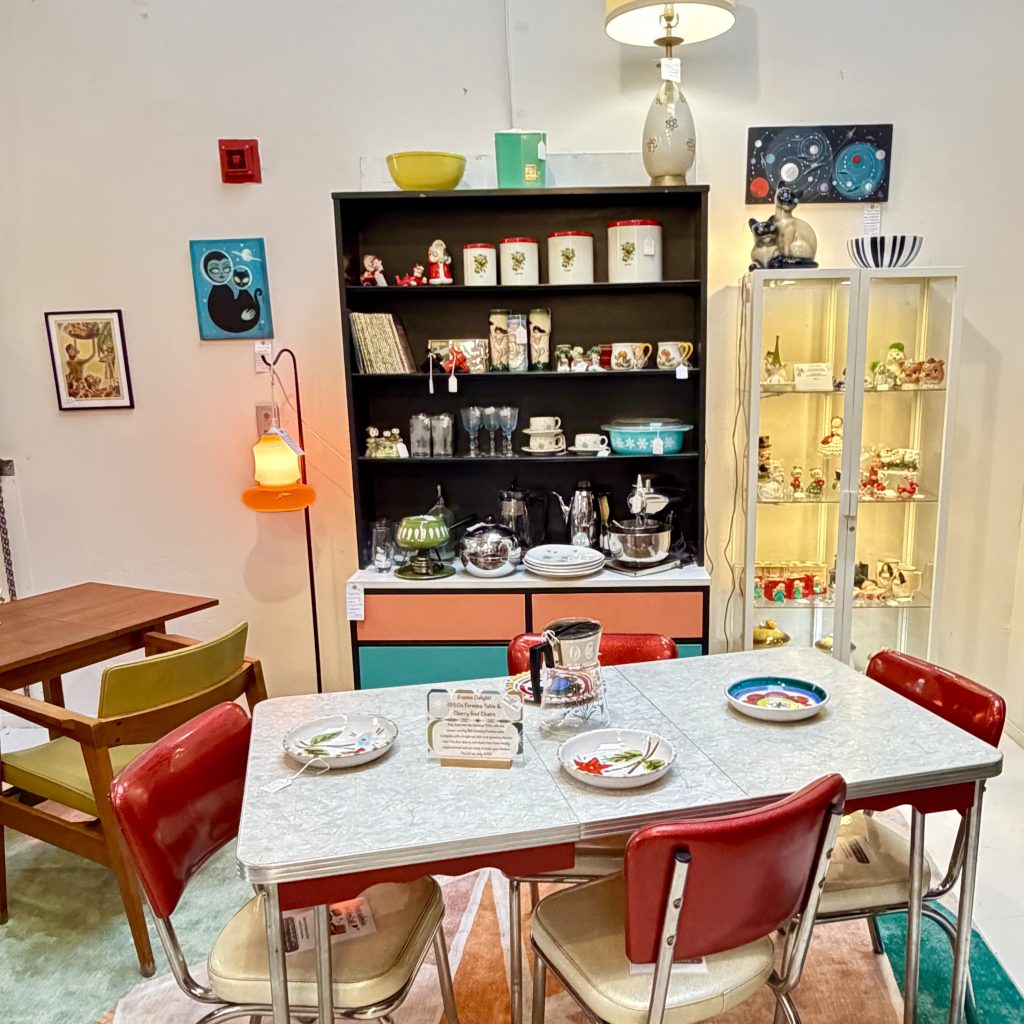
1950s Formica Table with Chrome, Cherry Red Skirting and Chairs
  1. Breakfast Nook with a Wink: Place a cherry red oval or drop-leaf table in a sunny corner. Add a round woven placemat and mismatched vintage saucers for instant diner vibes.
  2. Modern-meets-Retro Dining: Mix a vintage table with one or two contemporary chairs (think molded wood or clear acrylic) to keep the look fresh and lived-in.
  3. Home Office with Personality: Use a compact Formica table as a desk. The wipeable surface is perfect for craft projects or laptop work. Add a retro lamp and a slim mid-century credenza for storage.
  4. Kid-Friendly Craft Station: The laminate top takes markers and paste like a champ! Cover the table with a removable vinyl runner when projects get wild.
  5. Alfresco Pop-Up: For parties, use a Formica set outside (under a covered porch). Add string lights and vintage Pyrex for a nostalgic picnic vibe.
  6. Layered Styling: Anchor the set with a geometric or starburst rug, hang an atomic clock, and place small ceramic figures (pixies, mermaids, or Santa mugs!) on open shelving.
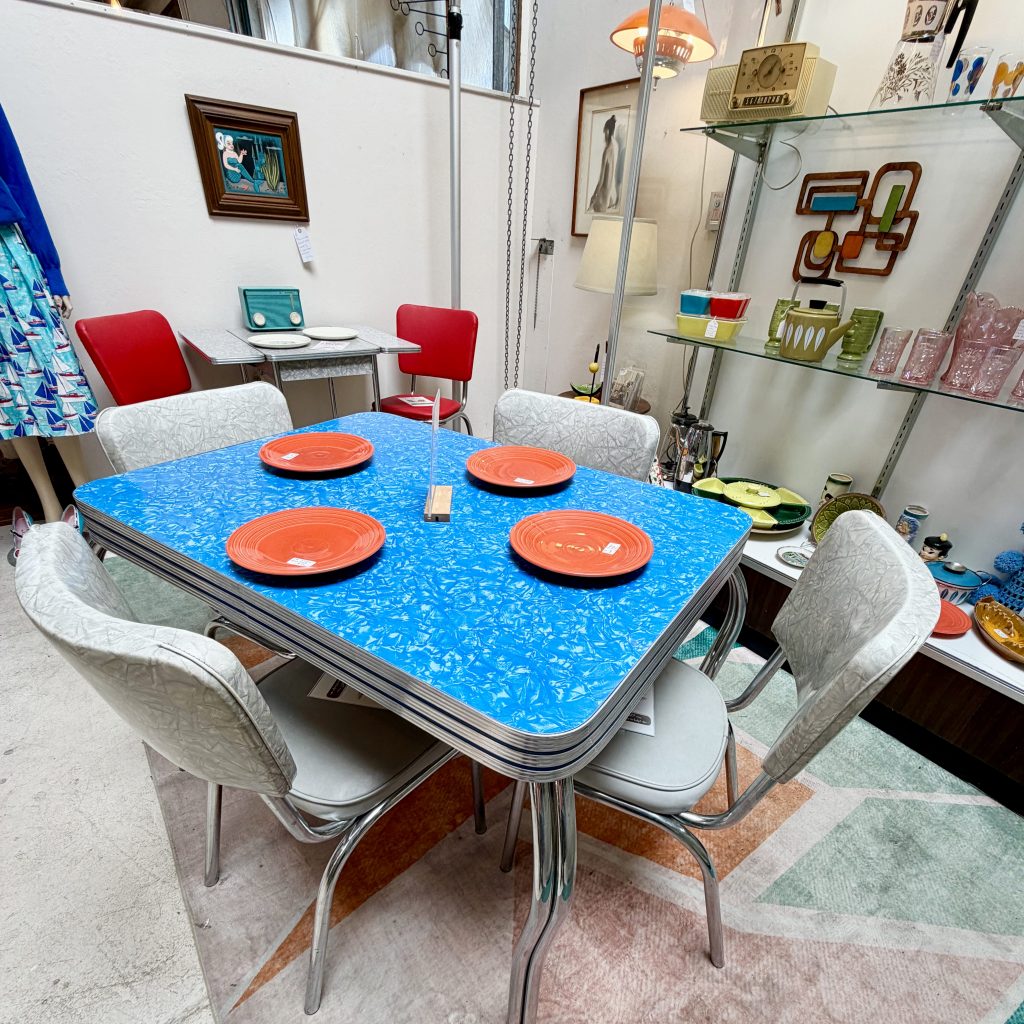
Color & Accessory Pairings

Table ColorBest Pairings
TurquoiseCoral accents, brass lamps, and pale wood.
Red VinylNeutral walls and a teal rug for punch without chaos.
PastelsMint, pink, and aqua look sensational balanced with chrome.

The Sets I’m Using Right Now

Mid-Century Blue Formica Drop-Leaf Table and Chairs
Continue reading