
Where bluebirds gossip, flowers blush, and vegetables smile back.
There’s something magical that happens when you open the glass doors of a true kitsch queen’s cabinet. These vintage 1950s Japanese ceramics aren’t just displays—they are a stage where bluebirds flirt and wide-eyed corn cuties ready for their close-up. If you collect anthropomorphic kitchen decor, you know the joy of a perfectly curated ‘shelfie’.

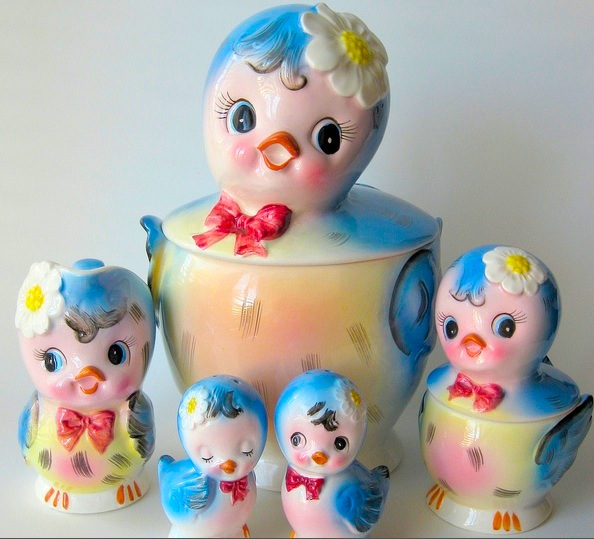
🩵 🐦Lefton Bluebirds lead the charge, their sweet sky-colored wings and bashful smiles turning spice racks into scenes from a 1950s kitchen fairytale. Norcrest and Topline Imports also manufactured bluebirds in Japan in the 1950s along with Lefton. Whether perched on planters or peeking from sugar bowls, they bring the chirpiest charm.
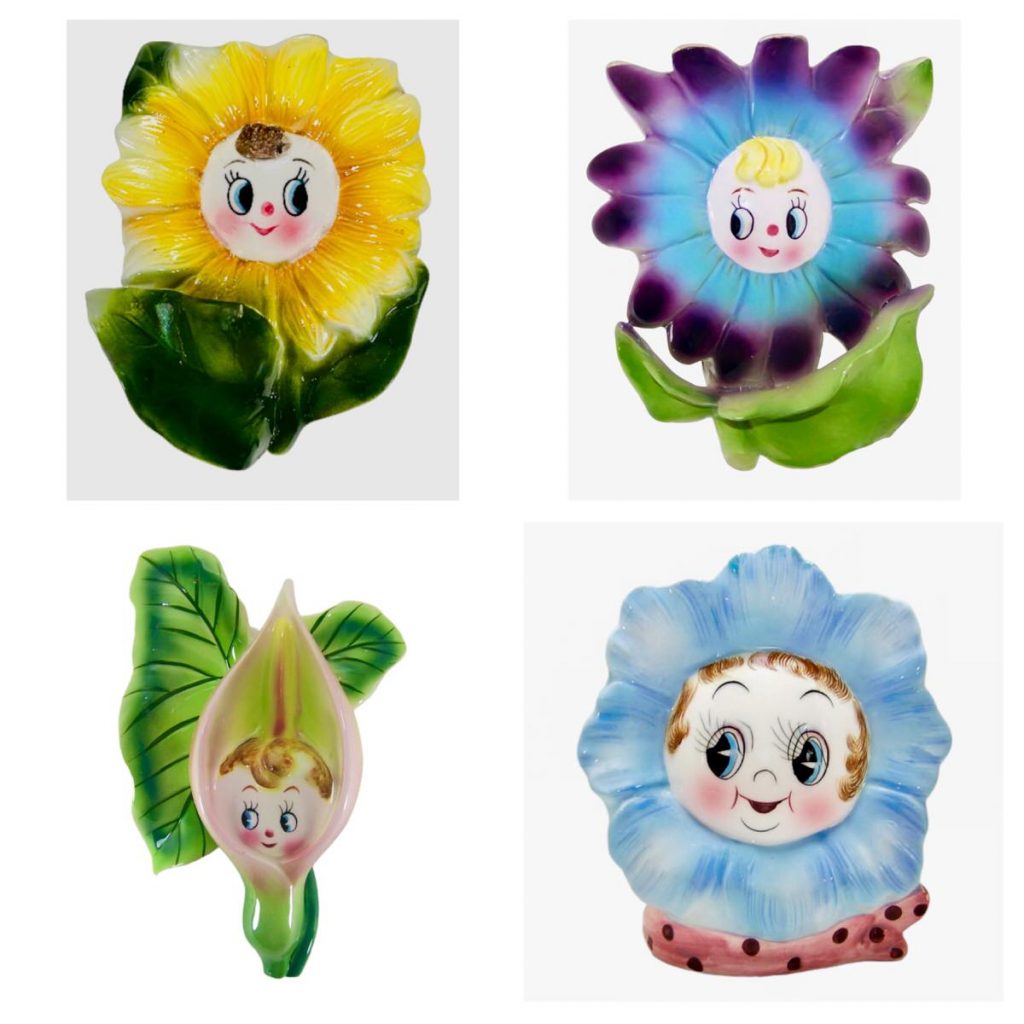
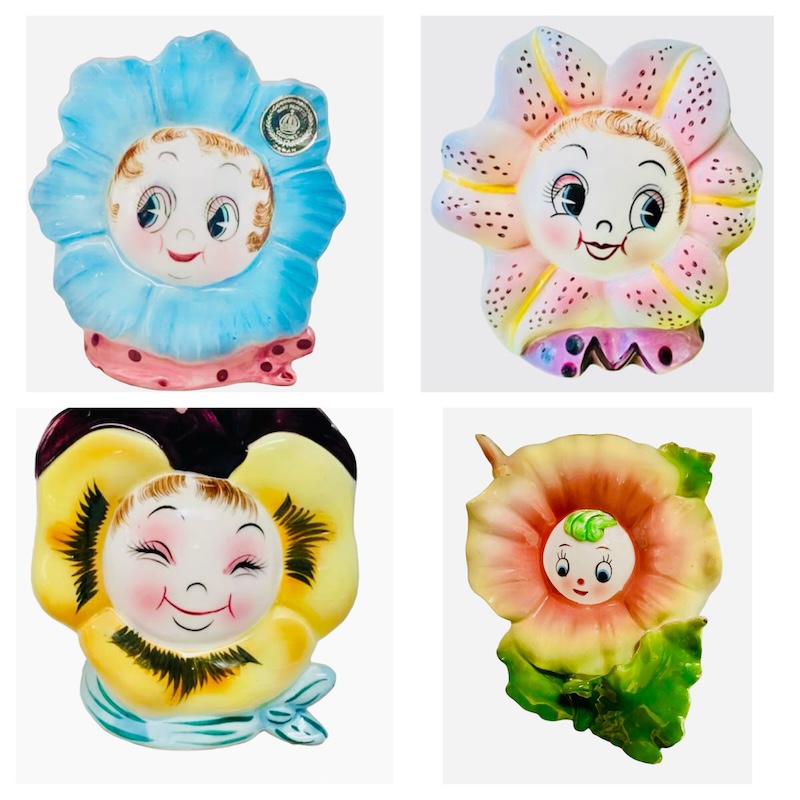
🌸 Flower-faced cuties—like daffodil darlings, pansy pixies, and rosy-cheeked blooms—are in full bloom inside collectors’ cabinets. These pastel-hued petals with personality add the perfect pop of charm to spring and summer shelfies. Made by PY Miyao in 1950s Japan, these whimsical wall plaques and pockets are prime examples of anthropomorphic ceramics—where even flowers have faces (and fabulous attitudes).

🌽 And let’s not forget the anthropomorphic produce: corn with eyelashes, cabbage with sass, and all have those big eyes and long eyelashes. These pieces, mostly by PY and Napco, are little works of adorably wonderful ceramics from the 1950s that turn kitchens into retro dreamlands.


Peek inside vintage kitsch cabinets featuring Lefton bluebirds, flower-face cuties, and PY anthropomorphic ceramics in the ultimate “shelfie” showcase. These aren’t just shelves—they’re retro wonderlands where bluebirds gossip, blushing blossoms pose, and vegetables grin like they’re starring in a mid-century sitcom.
How to Identify and Care for Your Kitsch Collection
Identifying authentic vintage Japanese kitsch requires a keen eye for maker marks. Look for the classic gold foiled stickers from Lefton, or the stamped “PY” or “Japan” marks on the base.
3 Tips for Preserving Your Ceramics:
- Avoid Hot Water: Many 1950s pieces are “cold-painted” (painted after firing), meaning the red lips or rosy cheeks can wash right off in hot water.
- Dust with Care: Use a soft makeup brush to clean delicate eyelashes and petals.
- Check for Crazing: Fine lines in the glaze are common in 70-year-old ceramics, but keeping them out of direct sunlight prevents further damage.
If you are looking to start your own collection, you can find authentic 1950s Japanese ceramics in my Etsy shop. For more tips, check out my guide on the best books for vintage collectors.”
Most of the photos featured are from my personal collection, with a few sourced from Pinterest to show the full charm of these collectible cuties.