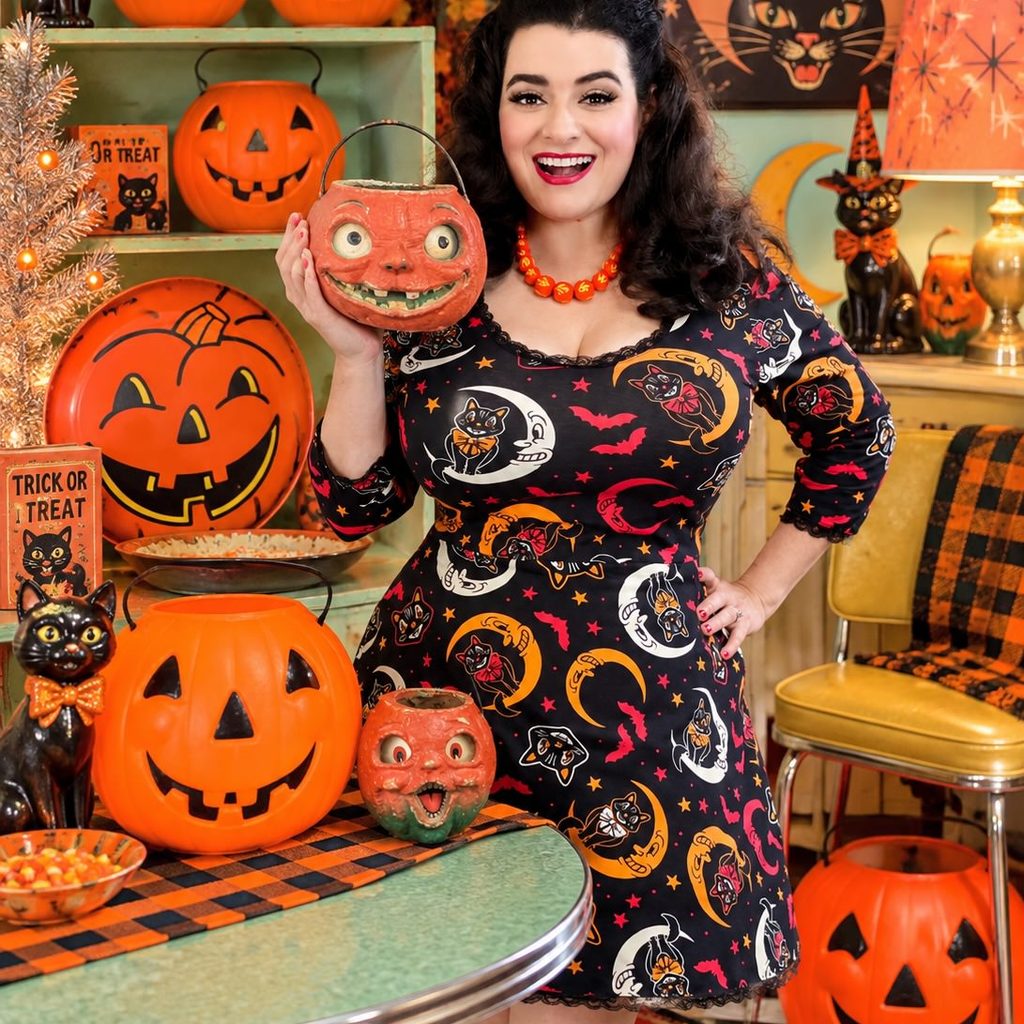
Halloween is right around the corner! While modern Halloween aisles are packed with plastic and polyester, true vintage Halloween decorations have become some of the hottest, most sought-after holiday collectibles on the market.
If you’ve been dreaming of starting your own collection of vintage Halloween masks, papier-mâché lanterns, celluloid toys, or tin noisemakers but aren’t sure where to start, you’re in the right place. Here is everything you need to know to hunt, identify, and value vintage Halloween treasures.
What Makes Vintage Halloween So Scarce)?
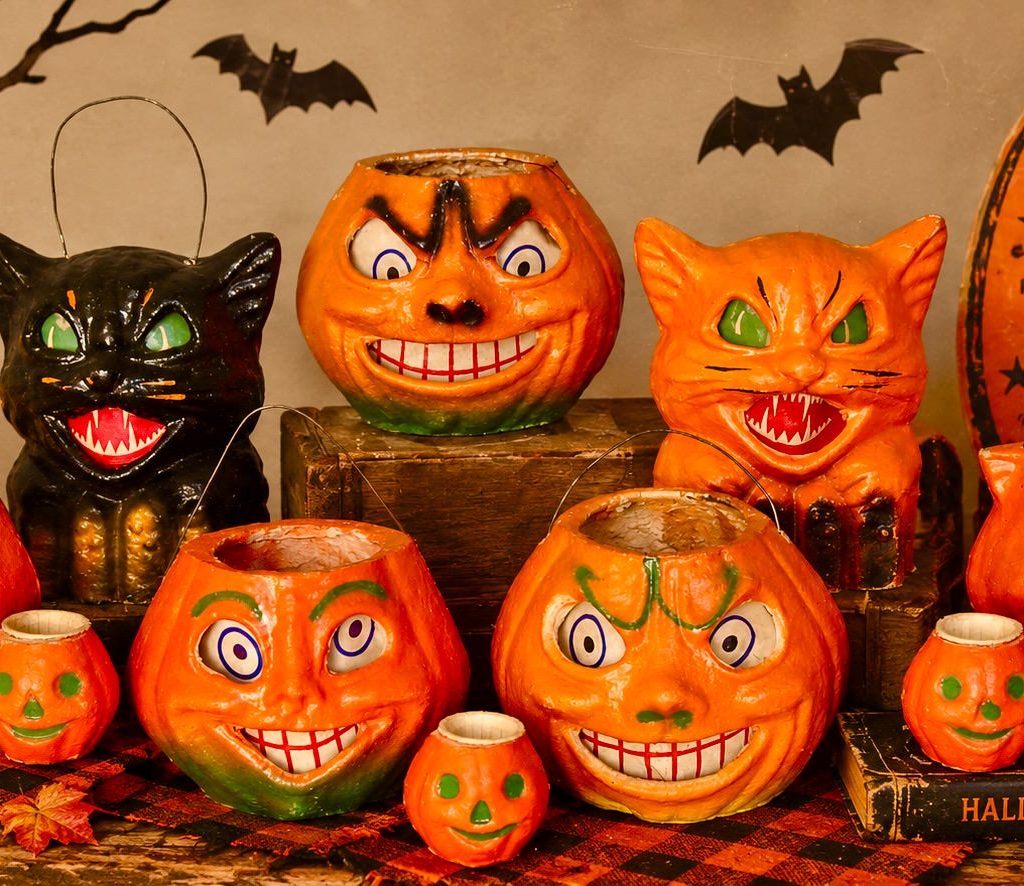
Unlike vintage Christmas decorations—which were carefully packed into attic boxes and passed down through generations—Halloween decor was created to be disposable.
From roughly 1915 through the 1950s, items like papier-mâché lanterns, crepe paper party favors, and die-cut cardboard decorations were manufactured primarily for one-night adult dinner parties and community gatherings. Once the party was over, most of these fragile paper and cardboard items were thrown away.
Because so few survived decades of damp basements and toss-outs, finding undamaged pieces today is rare—making the hunt all the more thrilling!
Top Categories to Collect
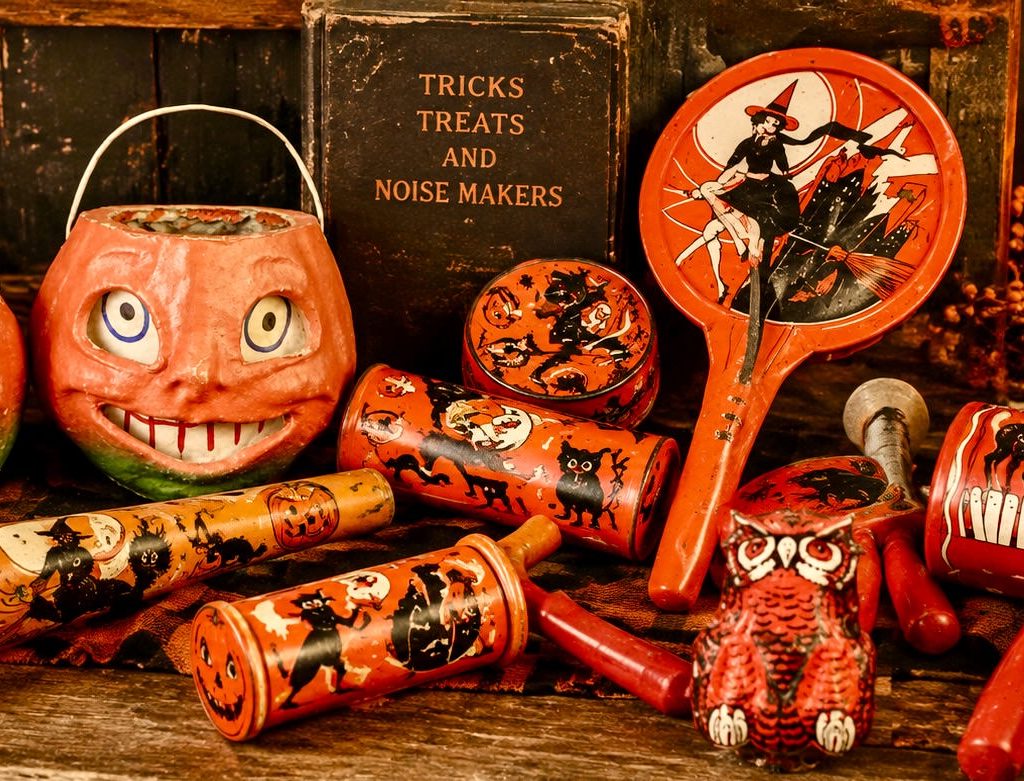
- Papier-Mâché & Pulp Lanterns: Produced primarily in Germany (1920s–1930s) and later by American makers like Beistle and Empire (1940s–1950s), these iconic pumpkin, skull, and devil heads featured thin translucent paper inserts that glowed when lit.
- Tin Litho Noisemakers: Rattlers, clackers, spinning wheels, and tambourines made by U.S. manufacturers like Chein, US Metal Toy, and Kirchhof feature vibrant, quirky graphics.
- Candy Containers: Made from papier-mâché, hard plastic, or celluloid, these small figures held tiny treats for party guests.
- Die-Cut Cutouts: Cardboard wall hangings featuring black cats, witches, and jack-o’-lanterns (especially early pieces by Beistle and Dennison).
What Are They Worth? (Updated Price Guide)
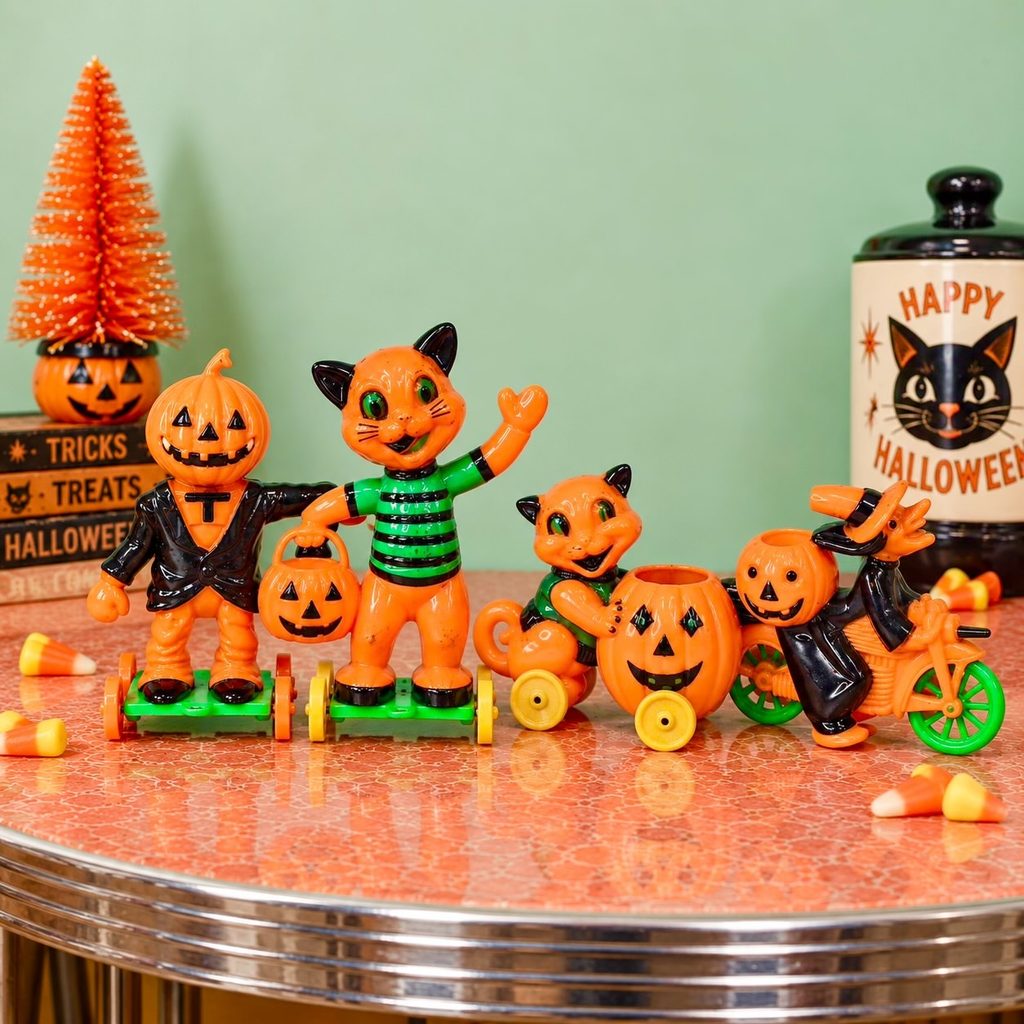
Because vintage Halloween is in high demand, prices reflect its scarcity. Value depends heavily on condition, rarity, and whether original components (like paper lantern inserts) are intact.
- Noisemakers & Clackers: $25 – $150+ (Great for budget-conscious beginners!)
- Die-Cut Cardboard Cutouts: $35 – $250+ depending on size and maker.
- Papier-Mâché Candy Containers: $150 – $400+ for standard pieces; rare figures can reach $1,000+.
- German Papier-Mâché Lanterns: $300 – $600+ for common styles; rare or oversized lanterns with original paper inserts regularly fetch thousands at auction.
Watch Out for Reproductions!
Due to high demand, the market is full of modern “repros” made to look old. Keep these quick authentication tips in mind:
- Check the Materials: True early pieces use pulp papier-mâché, pressed cardboard, or thin sheet tin. Modern reproductions often use heavier resin or low-grade fiberglass.
- Inspect the Wear: Authentic age creates uniform yellowing and natural wear on edges. If a piece has heavy fake “grime” but bright white paper inserts, be cautious.
- Look for Maker Marks: Look for stampings like “Made in Germany”, “U.S. Metal Toy Mfg. Co.”, or “Beistle”.
Where to Hunt for Vintage Halloween
Finding these gems requires a bit of strategy:
- Antique Malls & Specialty Shops: Look for booths specializing in mid-century or holiday collectibles.
- Major Antique Shows & Flea Markets: Events like Brimfield, Round Top, and regional antique expos often bring out high-end holiday dealers.
- Online Platforms: eBay, Etsy, and specialized Facebook collector groups are fantastic places to find authenticated pieces from experienced sellers.
How can you tell if vintage Halloween decor is a reproduction?
Because collecting vintage Halloween decor has surged in popularity, modern reproductions (including high-end vintage-style decor from brands like Bethany Lowe or Department 56) are frequently mislabeled as antique online. To spot a fake, check three things:
- Weight and material: Authentic 1920s–1940s lanterns and candy containers are made of lightweight, hollow pulp papier-mâché or pressed cardboard, whereas modern reproductions are usually heavier resin, thick plaster, or ceramic.
- The blacklight test: Shine a UV blacklight on paper inserts, crepe paper, or cardboard cutouts. Modern bleached paper and synthetic glues typically glow bright white or blue under UV light, while pre-1950s paper remains dull.
- Uniform “grime”: Authentic age shows natural wear on high contact points like bottom edges and handles. If an item looks artificially splattered with dark paint or uniform “dirt” but has bright, crisp interior paper, walk away.
How do you clean and store fragile papier-mâché Halloween collectibles?
Never use water, liquid cleaners, or damp cloths on vintage papier-mâché or cardboard cutouts, as moisture will warp the pulp and dissolve original water-based paints. Gently dust pieces with a clean, dry soft-bristle paintbrush or makeup brush. For off-season storage, wrap each piece individually in acid-free tissue paper and store them in sturdy, climate-controlled plastic bins inside your home—never in damp basements or uninsulated attics where humidity causes mold and cracking.
Happy hunting, spooky shoppers! Building a collection takes time, but every piece brings a little piece of history back to life. Want to immerse yourself in even more mid-century spooky magic? Head over to Pumpkin Carving and Vintage Halloween Fashion to see how vintage pinup and retro fashion bring the season to life.
Want to dive deeper into retro holiday collectibles? Explore Collectors Weekly for Vintage Halloween Grab your flashlight, check those attic corners, and happy collecting!